Oral motor exercises are crucial for a toddler’s development, strengthening muscles vital for eating, speaking, and overall communication skills; readily available PDF guides exist.
What are Oral Motor Exercises?
Oral motor exercises are specifically designed activities that strengthen the muscles within the mouth, including the lips, tongue, cheeks, and jaw. These exercises aren’t about rigorous workouts, but rather gentle, playful movements intended to improve coordination, range of motion, and strength. Many resources, including downloadable PDF guides, detail various techniques.
They address potential difficulties with speech articulation, feeding, and swallowing. For toddlers, these exercises can involve simple actions like blowing bubbles, puckering lips, or sticking the tongue out. The goal is to enhance the neurological connections between the brain and the oral structures, fostering better control and efficiency. Finding a suitable PDF can provide structured routines and visual aids for parents to follow at home, ensuring safe and effective implementation.
Why are Oral Motor Exercises Important for Toddlers?
Oral motor exercises are fundamentally important for toddlers as they directly impact crucial developmental areas. Strong oral muscles are essential for clear speech articulation, enabling effective communication as language skills blossom. They also play a vital role in safe and efficient feeding, transitioning to varied textures and preventing swallowing difficulties. Many helpful PDF resources outline the benefits.
Early intervention with these exercises can address potential delays or weaknesses, promoting healthy oral-motor development. Strengthening these muscles improves a toddler’s ability to manage food in their mouth, reducing the risk of choking or picky eating. Accessing a comprehensive PDF guide can empower parents to proactively support their child’s oral-motor skills, contributing to overall well-being and future success.
Developmental Milestones & Oral Motor Skills
Toddlers progress through predictable milestones requiring increasing oral-motor control; PDF guides detail these stages, supporting appropriate exercise selection and tracking progress.
18-24 Month Milestones: Refining Motor Skills
During this period, toddlers refine self-feeding skills, transitioning from a primarily pureed diet to more textured foods, demanding greater lip and tongue control. They begin to imitate sounds and simple words, necessitating improved articulation. PDF resources highlight exercises focusing on strengthening these emerging abilities.
Encouraging self-feeding with utensils, even with initial messiness, is key. Interactive games involving blowing bubbles or making animal sounds further stimulate oral muscles. A PDF guide can offer specific activities to enhance dexterity and coordination. Observe for consistent chewing and swallowing patterns, and consult resources if concerns arise. This stage is about building a foundation for future speech and feeding independence, and readily available PDFs can assist parents.
24-36 Month Milestones: Increasing Complexity
As toddlers approach preschool age, oral motor skills become more complex, involving varied food textures and increasingly intelligible speech. They begin combining words and forming short sentences, requiring precise tongue and lip movements. PDF guides offer targeted exercises to support this progression.
Mealtime activities should encourage chewing a wider range of foods, promoting jaw strength and coordination. Games involving straw sipping or blowing whistles further challenge oral muscles. A downloadable PDF can provide structured routines for these exercises. Monitor for any difficulties with articulation or swallowing, and utilize available resources for guidance. This stage focuses on refining skills for clear communication and confident eating, with helpful PDF support.

Specific Oral Motor Exercises
Oral motor exercises encompass lip strengthening, tongue control, and cheek engagement; many resources, including detailed PDF guides, illustrate techniques for effective practice.
Lip Strengthening Exercises
Lip strengthening exercises are foundational for clear articulation and efficient feeding skills in toddlers. Strong lips facilitate precise movements needed for speech and managing food textures. A simple, effective exercise involves having your child hold a popsicle stick or the handle of a spoon between their lips, encouraging a gentle but firm closure.
Another beneficial activity is lip smacking and puckering. Encourage your toddler to repeatedly smack their lips together, then pucker them as if giving a kiss. These actions build strength and coordination. Many PDF guides detailing oral motor exercises for toddlers provide visual demonstrations and progressive difficulty levels for these lip exercises. Remember to keep sessions short, playful, and positive to maintain engagement.
Popsicle Stick/Spoon Between Lips
This exercise directly targets lip closure and strength, essential for both speech and feeding. Present your toddler with a clean popsicle stick or the handle of a spoon. Gently encourage them to hold it between their lips, maintaining closure for a few seconds at a time. Start with short durations – perhaps 3-5 seconds – and gradually increase the hold time as their strength improves.
Supervision is key to ensure safety and prevent choking. Many oral motor exercises PDF guides recommend starting with a wider object, like a spoon handle, and progressing to a narrower stick. Observe for any signs of fatigue or frustration, and always make it a playful activity. Consistent practice, even for a few minutes daily, can yield noticeable improvements in lip control.
Lip Smacking & Puckering
These exercises enhance lip strength, coordination, and range of motion. Encourage lip smacking by modeling the action yourself – make a clear “smacking” sound and invite your toddler to imitate. For puckering, demonstrate rounding the lips as if to kiss, and again, encourage imitation. Many oral motor exercises PDF guides suggest making these activities fun by associating them with sounds or actions, like pretending to eat a yummy treat.
Vary the intensity and speed of these movements. Start slowly and gradually increase the pace. Observe your child for any signs of difficulty or fatigue. These exercises are excellent for preparing the lips for more complex speech sounds and improving oral awareness. Remember to keep sessions short and engaging, focusing on positive reinforcement.
Tongue Exercises
Strengthening the tongue is vital for articulation and feeding skills. Oral motor exercises PDF resources often detail a progression of tongue movements. Begin with simple exercises like tongue protrusion – sticking the tongue out – and retraction, bringing it back in. Encourage your toddler to touch their chin with their tongue, gradually increasing the distance.
Next, introduce tongue lateralization, moving the tongue from side to side, attempting to touch the corners of the mouth. These movements improve tongue control and range of motion. Make it playful by pretending to “paint” with the tongue or “wash” the teeth. Always supervise and ensure the child doesn’t strain. Consistency is key for noticeable improvements.
Tongue Protrusion & Retraction
Tongue protrusion and retraction are foundational oral motor exercises, frequently detailed in PDF guides for toddlers. Start by encouraging your child to stick their tongue out as far as comfortable – this is protrusion. Then, guide them to pull their tongue back into their mouth – retraction.
Make it engaging by using a mirror, allowing them to visually see their tongue movements. You can also use prompts like “stick your tongue out like a lizard!” or “pull your tongue back in!”. Gentle tactile cues, like lightly touching the chin, can assist. Repeat 10-15 times, several times a day. Ensure the movement is controlled and doesn’t involve straining or excessive jaw movement.
Tongue Lateralization (Side-to-Side)
Tongue lateralization, or moving the tongue from side to side, is a key oral motor exercise often found in PDF resources for toddler development. This exercise builds strength and coordination essential for chewing and speech articulation. Begin by asking your child to touch the corners of their mouth with their tongue.
Model the movement yourself to provide a visual cue. You can playfully encourage them by saying, “Let’s wash the inside of your cheeks!”. Gentle finger prompts at the corners of the mouth can offer support. Repeat this movement 10-15 times, several times throughout the day. Observe for any signs of fatigue or difficulty, and adjust accordingly. Consistency is key for building strength!
Cheek Exercises
Cheek exercises are vital components of a comprehensive oral motor exercise plan, often detailed in helpful PDF guides. Strong cheek muscles contribute to efficient chewing, bolus control, and clear speech. These exercises focus on building strength and endurance in the buccinator muscles – the muscles forming the cheeks.
Two primary exercises are commonly recommended. Cheek puffing involves inflating the cheeks with air, holding for a few seconds, and then releasing. Cheek retraction, or smiling widely, strengthens the muscles used to pull the cheeks inward. Encourage your toddler with playful cues like “Make a fish face!” or “Show me your biggest smile!”. Repeat each exercise 10-15 times, several times daily.
Cheek Puffing
Cheek puffing is a foundational oral motor exercise, frequently outlined in PDF resources for parents and therapists. This exercise targets the buccinator muscles, crucial for chewing and maintaining food within the mouth. To perform it, instruct your toddler to fill their cheeks with air, resembling a chipmunk storing nuts.
Ensure they hold the puffed cheeks for approximately three to five seconds, then slowly release the air. This builds endurance and strength. Make it fun by encouraging silly faces or blowing gentle raspberries with puffed cheeks. Repeat this exercise 10-15 times, several times throughout the day. Supervision is key to ensure proper technique and prevent overexertion.
Cheek Retraction (Smiling)

Cheek retraction, or smiling, is a simple yet effective oral motor exercise often detailed in PDF guides for toddler development. This activity strengthens the muscles used for smiling and helps improve facial muscle tone. Encourage your child to give a big, genuine smile, pulling their cheeks inward.
Hold the smile for a few seconds, then relax. You can make it playful by asking them to “show all their teeth!” or by smiling back and forth. This exercise is naturally engaging for toddlers and requires minimal instruction. Repeat 10-15 times throughout the day, integrating it into playtime or daily interactions. Consistent practice supports healthy oral motor skills and facial expression development.
Integrating Exercises into Daily Activities
Oral motor exercises seamlessly blend into routines like tooth brushing, mealtimes, and play, enhancing development; many PDF resources offer practical integration ideas.
Tooth Brushing as an Exercise
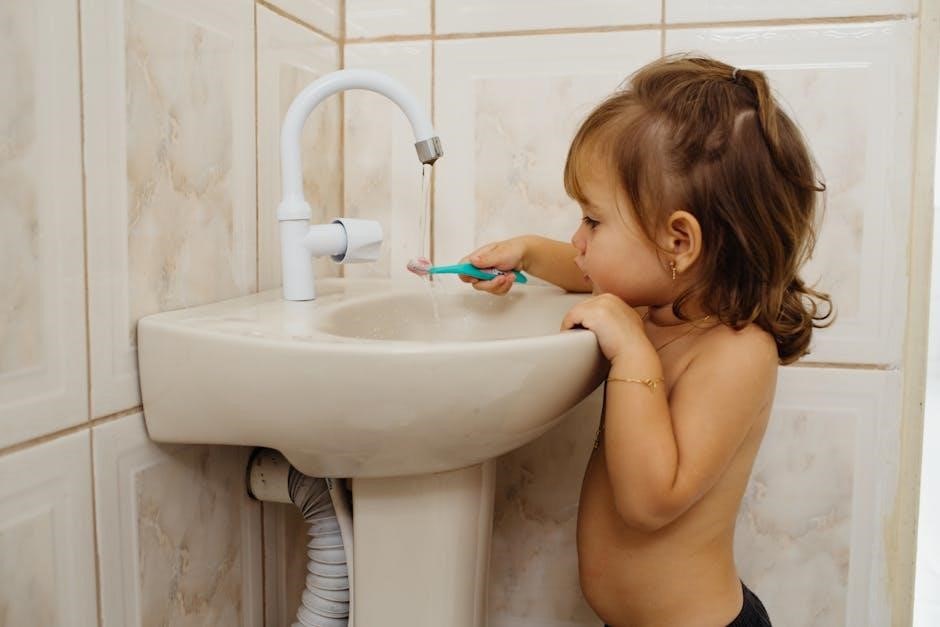
Tooth brushing transforms into a beneficial oral motor exercise, going beyond hygiene! Encourage toddlers to actively participate, controlling the brush with assistance as needed. This strengthens lip rounding, tongue movement, and jaw stability – all crucial skills. Utilize both manual and electric toothbrushes for varied sensory input.
Brushing the lips themselves provides tactile stimulation, enhancing awareness. Gentle circular motions encourage lip closure and coordination. Many PDF guides detailing oral motor exercises highlight tooth brushing as a readily available, functional activity. Remember to supervise closely, ensuring safe and effective technique. This daily routine becomes a playful opportunity to build essential oral skills, readily accessible and easily incorporated into a child’s day.
Mouth Toys & Chewing
Mouth toys and appropriate chewing items offer fantastic oral motor stimulation for toddlers! Chewing strengthens jaw muscles, improves oral awareness, and can even help with sensory regulation. Select safe, non-toxic options designed for oral exploration – avoid anything that could break or pose a choking hazard. Textured chew toys provide varied sensory input, enhancing the experience.
Many PDF resources on oral motor exercises recommend incorporating chewing into a child’s routine. Supervise closely during use, and rotate toys to maintain interest. Consider the child’s individual needs and preferences when selecting items. This simple activity supports development, building strength and coordination in a fun and engaging way, readily available for daily practice.
Mealtime Activities for Oral Motor Development
Mealtime presents numerous opportunities to naturally enhance a toddler’s oral motor skills! Offering a variety of food textures – soft, crunchy, chewy – challenges the mouth muscles in different ways. Encourage self-feeding with appropriately sized utensils, promoting coordination and dexterity. Present foods that require more effort to manipulate, like small pieces or those needing lip rounding.
Many PDF guides detailing oral motor exercises emphasize the importance of integrating practice into daily routines. Blowing bubbles while eating, or sipping through a straw, adds extra work for the mouth. Supervise closely, and make mealtimes fun and positive. These activities build strength, coordination, and oral awareness, all while nourishing your child, and are easily found online.
Safety Considerations & Modifications
Oral motor exercises require careful supervision; gentle guidance is key, and modifications should be made based on a child’s abilities, as detailed in PDF guides.
Guiding Jaw Movement
Guiding jaw movement during oral motor exercises is a delicate process, requiring a gentle touch and careful observation. Initially, instead of asking a child to independently open and close their mouth, therapists suggest utilizing fingers as tactile cues. These cues provide gentle support and encouragement, helping the child understand the desired motion.
This technique is particularly helpful for toddlers who struggle with initiating or coordinating jaw movements. The PDF guides often illustrate this, emphasizing the importance of starting with minimal assistance and gradually fading the support as the child gains strength and control. Avoid forcing the jaw open, as this can create tension and resistance. The goal is to facilitate natural movement, not to impose it.
Remember to observe the child’s response and adjust your approach accordingly. If they exhibit discomfort or resistance, stop the exercise and consult with a speech-language pathologist for further guidance. Proper technique, as outlined in reliable resources, ensures safety and maximizes the benefits of these exercises.
Supervision During Exercises
Supervision is paramount when implementing oral motor exercises with toddlers. These exercises, detailed in many PDF guides, require constant monitoring to ensure safety and effectiveness. Toddlers may lack the understanding to perform exercises correctly or to self-regulate, potentially leading to choking hazards or frustration.
Active supervision involves observing the child’s form, response, and overall well-being throughout the activity. Be vigilant for signs of fatigue, discomfort, or difficulty. Never leave a toddler unattended during exercises involving small objects like popsicle sticks or spoons.
Furthermore, supervision allows for immediate intervention if the child deviates from the instructed technique. Consistent guidance and positive reinforcement are crucial for maintaining engagement and promoting successful outcomes. Always prioritize a safe and supportive environment, referencing the detailed instructions found within reputable exercise resources.

Resources & Further Information
Numerous PDF exercise guides are available online, offering detailed instructions; consulting a Speech-Language Pathologist provides personalized support and expert guidance for your toddler.
Finding Printable Exercise Guides (PDFs)
Locating printable oral motor exercise guides in PDF format is remarkably easy with a quick online search. Many speech therapy websites and blogs offer free, downloadable resources designed specifically for toddlers. These guides often include visual aids and step-by-step instructions, making them user-friendly for parents and caregivers.
When searching, use keywords like “toddler oral motor exercises PDF,” “speech therapy exercises for kids PDF,” or “feeding therapy exercises PDF.” Be sure to preview the guide before printing to ensure it aligns with your child’s needs and abilities. Look for guides created by qualified speech-language pathologists to guarantee accuracy and safety. Several platforms host collections of these resources, providing a convenient way to access a variety of exercises tailored to different developmental stages and skill levels. Remember to always prioritize safety and consult with a professional if you have any concerns.
Consulting with a Speech-Language Pathologist
While PDF guides offer helpful oral motor exercises, consulting a Speech-Language Pathologist (SLP) is invaluable for personalized support. An SLP can accurately assess your toddler’s specific needs, identifying areas requiring focused intervention. They’ll create a tailored exercise plan, ensuring activities are developmentally appropriate and effective.
An SLP can also rule out underlying issues impacting oral motor skills, such as tongue-tie or sensory sensitivities. They provide guidance on proper technique, preventing potential difficulties and maximizing benefits. Don’t hesitate to seek professional advice if you notice persistent challenges with feeding, speech, or oral motor control. An SLP can offer expert insights and support, empowering your child to reach their full potential. They can also recommend appropriate PDF resources to supplement therapy.