Oregon Mushroom Guide: An Overview
Oregon’s diverse ecosystems, ranging from coastal rainforests to high desert, support an incredible variety of fungal life, making it a premier destination.
This guide explores the world of Oregon mushrooms, covering identification, foraging safety, and resources for both beginners and experienced mycophiles alike.
Discover the golden chanterelles, springtime morels, and prized matsutake, alongside essential knowledge for responsible and safe mushroom hunting adventures.
Oregon boasts an extraordinary fungal biodiversity, a hidden kingdom flourishing beneath the state’s varied landscapes. From the lush, damp coastal forests to the drier, inland regions, a remarkable spectrum of mushrooms thrives. This abundance is fueled by Oregon’s unique climate – wet falls, mild winters, and forests dominated by conifers like Douglas fir, western hemlock, and Sitka spruce – creating ideal conditions for countless species.
The fungal world in Oregon isn’t limited to the well-known edibles. Thousands of species, playing crucial ecological roles, exist, from decomposers breaking down organic matter to mycorrhizal fungi forming symbiotic relationships with tree roots. These relationships are vital for forest health and nutrient cycling. Exploring Oregon’s fungi reveals a complex and interconnected web of life, often unseen but profoundly important. Understanding this diversity is the first step towards responsible foraging and appreciation of this fascinating kingdom.
Why Oregon is a Mushroom Foraging Hotspot
Oregon’s reputation as a mushroom foraging paradise stems from a confluence of geographical and climatic factors. The Pacific Northwest’s consistent moisture, particularly during fall and winter, provides the necessary hydration for fungal growth. The prevalence of coniferous forests, especially those featuring Douglas fir, western hemlock, and Sitka spruce, offers ideal habitats for many prized edible species.
Furthermore, the presence of recent forest fires creates unique opportunities, particularly for morel mushrooms, which often flourish in burn sites. The state’s diverse topography, ranging from coastal ranges to the Cascade Mountains, contributes to a variety of microclimates, supporting a wider range of fungal species. This combination of factors makes Oregon a consistently productive and rewarding destination for mushroom hunters, attracting enthusiasts from across the globe.
Popular Edible Mushrooms of Oregon
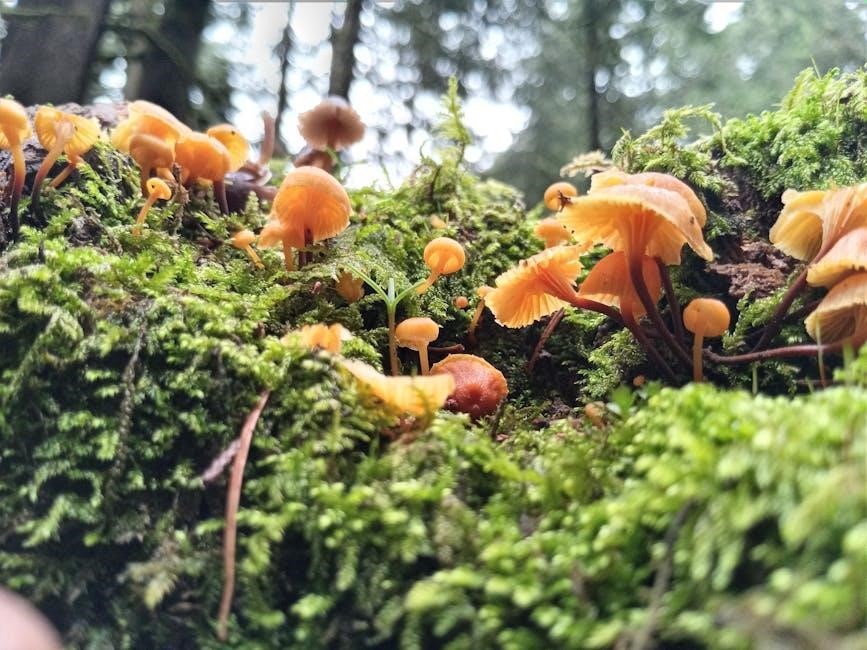
Oregon boasts a remarkable array of edible mushrooms, including chanterelles, morels, oyster mushrooms, matsutake, and lobster mushrooms, each offering unique flavors and textures.
Chanterelles: The Golden Delight
Chanterelles are arguably Oregon’s most iconic edible mushroom, celebrated for their vibrant golden color and fruity aroma. These mycorrhizal fungi form symbiotic relationships with trees, typically found in coniferous and deciduous forests during the fall months, particularly after rainfall.
Identifying chanterelles involves looking for their trumpet-like shape, false gills (ridges that run down the stem), and a distinctive apricot-like scent. They are often found near Douglas fir, western hemlock, and oak trees.
Their flavor is delicately peppery and fruity, making them incredibly versatile in the kitchen – perfect sautéed, in creamy sauces, or added to omelets. Careful harvesting, cutting the stem rather than pulling, ensures future growth. Remember proper identification is crucial!
Morels: Springtime Treasures
Morels represent the quintessential springtime find for Oregon mushroom hunters. These highly sought-after fungi emerge after disturbances like forest fires, making burn sites prime foraging locations. They also appear naturally near deciduous trees like ash, elm, and apple, and sometimes conifers.
Morels are easily recognized by their distinctive honeycomb-like cap, which is pitted with ridges and depressions. They are hollow inside and attach directly to the ground. Finding them requires patience and a keen eye, often hidden amongst leaf litter.
Their earthy, nutty flavor is unparalleled, and they are delicious sautéed in butter or cream sauces. Utilizing apps like OnX maps to locate past burn areas can significantly increase your success rate. Always cook morels thoroughly before consumption.
Oyster Mushrooms: A Beginner-Friendly Choice
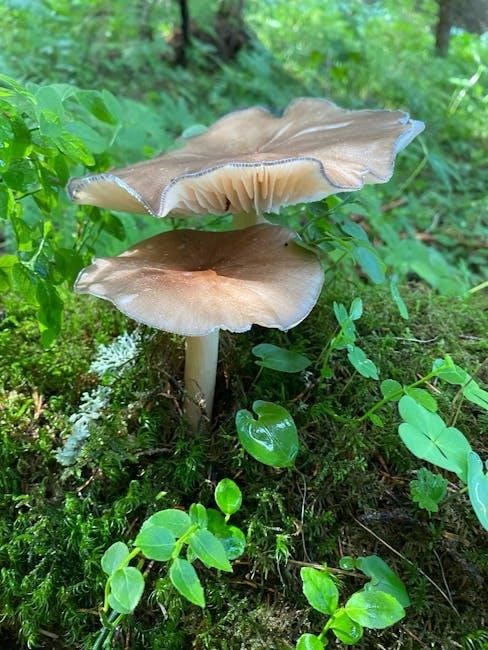
Oyster mushrooms are an excellent starting point for novice foragers in Oregon, due to their relatively easy identification and widespread availability. They grow on decaying hardwood trees, often appearing in clusters, and can be found throughout the year, though are most abundant in the fall and winter.
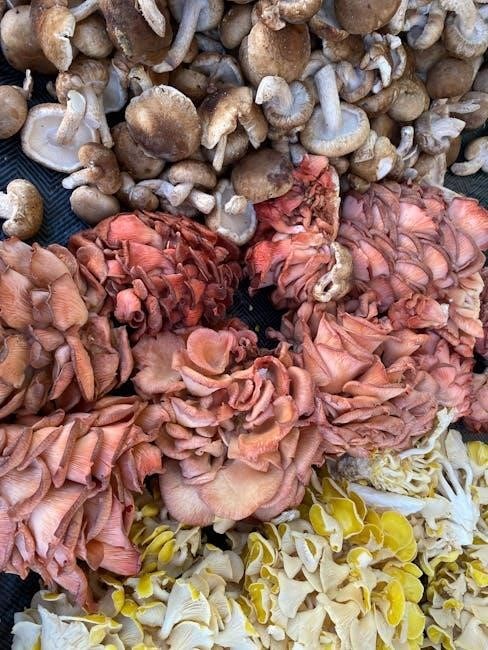
These mushrooms exhibit a fan or oyster-shell shape, with gills running down the stem. Colors range from white to gray, and sometimes even pink or yellow. They have a delicate, slightly seafood-like flavor, making them versatile in the kitchen.
In Western Washington and Oregon, a simple formula exists: look for them on recently felled trees. Their rapid growth and distinct appearance make them less prone to misidentification, but always confirm with multiple sources before consuming.
Matsutake: A Highly Prized Delicacy
Matsutake mushrooms represent one of Oregon’s most valuable fungal treasures, highly sought after for their unique, spicy-aromatic flavor and firm texture. These mycorrhizal mushrooms form a symbiotic relationship with specific coniferous trees, particularly Douglas fir and pine, making their location somewhat elusive.
Identifying Matsutake requires experience, as they grow partially buried in the forest duff. They possess a distinctive cinnamon-like scent and a thick, sturdy stem. The cap is often tan or brown, with a slightly scaly surface.
Coniferous forests are prime Matsutake territory, and foraging often involves careful excavation to uncover these hidden gems. Due to their high value, responsible harvesting and knowledge of regulations are crucial.
Lobster Mushrooms: Unique Texture and Flavor
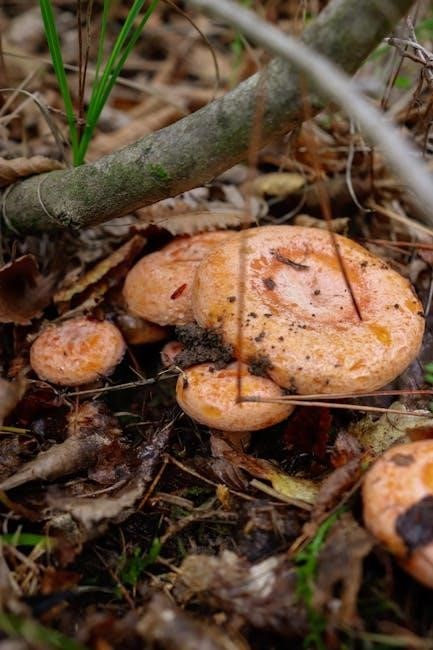
Lobster mushrooms (Hypomyces lactifluorum) aren’t actually a single species, but rather a parasitic fungus that attacks other mushrooms, most commonly Russula and Lactarius species. This fascinating interaction results in a firm, reddish-orange mushroom with a distinctive seafood-like aroma and flavor – hence the name!
Their texture is dense and meaty, making them excellent for grilling, sautéing, or adding to stews. Unlike many mushrooms, Lobster mushrooms don’t typically require peeling. They are found in coniferous forests, often near hardwoods, during the fall months.
Proper identification involves recognizing the altered form of the host mushroom, covered in the bright orange mycelium of Hypomyces lactifluorum. They are a relatively easy mushroom for beginners to identify, and a delicious addition to any forager’s haul.
Identifying Oregon Mushrooms: A Step-by-Step Guide
Accurate identification is paramount for safe foraging; this guide details crucial steps, including spore prints, cap features, gill examination, and stalk analysis.
Spore Prints: A Crucial Identification Tool
Creating a spore print is a fundamental technique in mushroom identification, revealing a hidden characteristic vital for accurate species determination. To obtain a spore print, remove the mushroom’s cap and place it, gills-down, on a piece of dark and light colored paper – both are recommended.
Cover the cap with a glass or bowl to maintain humidity, and allow it to sit for several hours, or even overnight. As the mushroom matures, it will release its spores, creating a powdery deposit on the paper.
The spore print’s color – white, brown, black, pink, or even rusty – is a key identifying feature, helping to differentiate between similar-looking mushrooms. This simple process can be the deciding factor in confirming a mushroom’s identity and ensuring safe consumption, especially when combined with other identification methods.
Cap Characteristics: Shape, Color, and Texture
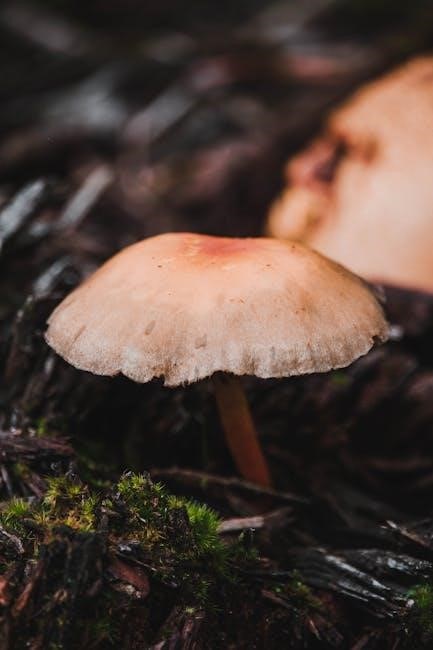
The mushroom cap exhibits a remarkable diversity in shape, color, and texture, offering crucial clues for identification. Caps can be convex, flat, umbonate (with a central bump), or even depressed, varying significantly between species.
Color ranges from vibrant reds and yellows to subtle browns and creams, often changing with age or moisture levels. Texture can be smooth, scaly, sticky, or dry to the touch, providing another distinguishing feature.
Observe whether the cap is dry or slimy, and note any distinctive markings, such as spots, ridges, or veil remnants. Carefully documenting these characteristics, alongside other features, is essential for accurate mushroom identification and safe foraging practices in Oregon’s diverse fungal landscape.
Gill or Pore Examination: Understanding Undersides
Examining the underside of a mushroom cap – whether it features gills or pores – is a fundamental step in identification. Gills are thin, radiating structures, varying in color, attachment to the stalk, and spacing.
Pores, found in boletes and polypores, are tiny holes that release spores. Note the pore color, size, and whether they bruise when touched. Gill spacing can be crowded, close, distant, or free from the stalk.
Observe if gills are attached, decurrent (running down the stalk), or notched. Careful observation of these features, combined with other characteristics, will significantly narrow down potential species matches when foraging in Oregon’s rich fungal environments.
Stalk Features: Identifying Key Details
The stalk, or stipe, offers crucial clues for mushroom identification. Note its length, diameter, color, and texture – is it smooth, scaly, or fibrous? Observe the presence or absence of a ring (annulus) or volva at the base.
A ring indicates a previous partial veil, while a volva suggests a universal veil once enclosed the entire mushroom. Examine the stalk’s surface for any markings, such as reticulation (net-like pattern) or bruising reactions when handled.
Is the stalk central, eccentric, or absent? These details, combined with cap and spore print characteristics, are vital for accurate species determination while exploring Oregon’s diverse fungal habitats.
Safety Considerations for Mushroom Foraging
Mushroom foraging demands caution; misidentification can be dangerous. Always positively identify species before consumption, respecting regulations and practicing responsible harvesting techniques.
The Dangers of Misidentification
Misidentification poses the most significant risk in mushroom foraging, potentially leading to severe illness or even fatality. Oregon hosts several toxic mushrooms that closely resemble edible varieties, making accurate identification crucial. Consuming a poisonous mushroom can cause gastrointestinal distress, neurological damage, liver failure, and other serious health complications.
Beginners should never consume a mushroom unless it has been positively identified by an expert. Relying solely on online images or generalized descriptions is insufficient. Variations in appearance due to growth conditions and maturity can be misleading. Always cross-reference multiple identification features, including cap shape, gill attachment, spore print color, and stalk characteristics. When in doubt, throw it out – the risk is simply not worth taking.
Seeking guidance from experienced foragers or joining a local mushroom club can significantly enhance your identification skills and ensure a safe foraging experience.
Avoiding Toxic Mushrooms
Proactive avoidance is paramount when foraging for mushrooms in Oregon. Familiarize yourself with the “deadly” species common to the region, such as the Death Cap (Amanita phalloides) and Destroying Angel (Amanita ocreata), learning to distinguish them from edible look-alikes. Understand that there are no universal rules for identifying edible mushrooms; folklore and quick tests are unreliable.
Focus on positively identifying edible species rather than trying to rule out poisonous ones. Always cook wild mushrooms thoroughly, as some contain toxins that are deactivated by heat. Start with easily identifiable mushrooms like oyster mushrooms, and gradually expand your knowledge base. Never consume a large quantity of any wild mushroom, even if correctly identified, to assess tolerance.
Carry photographs of mushrooms you’ve collected for expert verification and be prepared to discard any specimens with uncertain identification.
Foraging Regulations and Permits in Oregon
Oregon’s mushroom foraging regulations vary depending on the land ownership. State forests generally allow personal-use mushroom harvesting without a permit, but quantity limits may apply. National Forests and BLM lands often require a permit for commercial harvesting, and sometimes for larger personal-use collections – check with the specific ranger district.
Private landowners have the right to prohibit foraging on their property, so always obtain permission before entering. Some areas, like state parks and wilderness areas, may have restrictions or outright bans on mushroom collecting. It’s crucial to consult the Oregon Department of Forestry (ODF) and the Bureau of Land Management (BLM) websites for the most up-to-date regulations;
Respecting these rules ensures sustainable harvesting and preserves access for future generations of mushroom hunters.
Responsible Foraging Practices
Sustainable mushroom foraging is paramount to preserving Oregon’s fungal resources. When harvesting, use a knife to cut mushrooms cleanly at the base of the stem, rather than pulling them up, which can damage the mycelium. Carry mushrooms in a basket or mesh bag to allow spores to disperse as you walk.
Avoid compacting the soil around mushroom patches, and leave some mushrooms behind to reproduce. Be mindful of the surrounding habitat – avoid disturbing wildlife or damaging vegetation. Never harvest mushrooms from areas that may be contaminated, such as roadsides or industrial sites.
Practice “leave no trace” principles, packing out all trash and minimizing your impact on the environment. Respect private property and adhere to all foraging regulations.
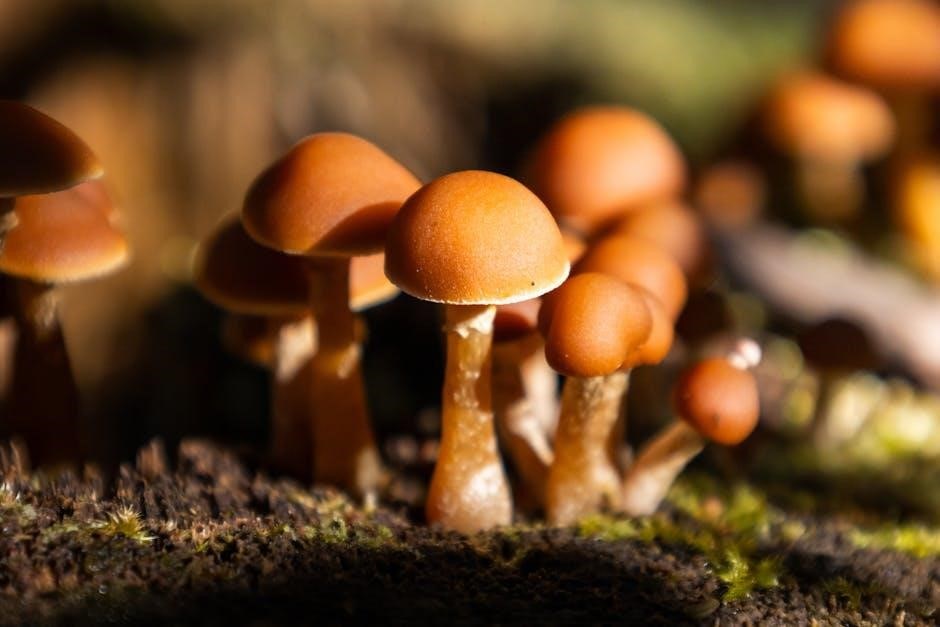
Resources for Oregon Mushroom Hunters
Numerous field guides, online resources, and local mushroom clubs assist Oregon foragers in safe identification and responsible harvesting practices throughout the state.
Field Guides and Books
For aspiring and seasoned mushroom hunters, comprehensive field guides are invaluable tools. Reuben O. Zion’s “Mushrooms of Oregon” serves as an excellent starting point, going beyond simple identification to unveil the hidden wonders of Oregon’s fungal landscapes.
Additionally, “Mushrooms of the Pacific Northwest Foraging Guide” by Steve Russell and Teresa Marrone offers a 5-step identification process, focusing on harvesting and preparing edible species found in Washington, Oregon, and British Columbia.
Walter E. Sturgeon and Gary A. Laursen’s works also provide detailed species descriptions and habitat information. These books are essential for building a strong foundation in mycology and ensuring safe foraging practices, helping you confidently navigate Oregon’s diverse fungal ecosystems.
Online Identification Resources
Complementing traditional field guides, numerous online resources aid in mushroom identification. While no single website replaces hands-on experience, they offer valuable supplementary information and image databases.
Mushroom Observer (mushroomobserver.org) is a citizen science platform where users can submit observations, receive identifications from experts, and contribute to a growing dataset of fungal occurrences.
iNaturalist (inaturalist.org) functions similarly, allowing users to record observations and leverage community identification. Always cross-reference information from multiple sources and prioritize expert confirmation before consuming any wild mushroom. Be cautious and remember that online resources should be used as a supplement, not a replacement, for thorough field study and expert guidance.
Mushroom Clubs and Societies
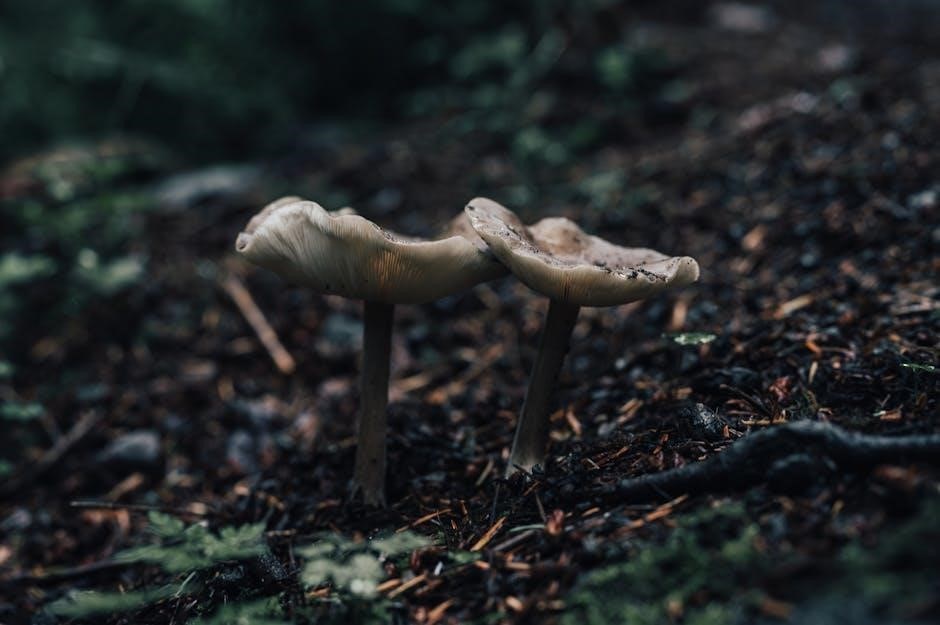
Joining a local mushroom club or mycological society is invaluable for Oregon foragers. These groups offer guided forays, workshops, and expert-led identification sessions, fostering a supportive learning environment.
The Oregon Mycological Society (oregomycologicalsociety.org) is a prominent organization hosting regular events and providing educational resources; Several regional clubs exist throughout the state, catering to specific areas and interests.
Participating in club activities provides opportunities to learn from experienced mycologists, refine identification skills, and connect with fellow enthusiasts. These communities emphasize safe foraging practices and responsible stewardship of Oregon’s fungal ecosystems. Club forays are an excellent way to gain confidence in identification and discover new foraging locations, always under the guidance of knowledgeable leaders.
Specific Habitats for Oregon Mushrooms
Oregon’s diverse habitats – coniferous forests, deciduous woodlands, burn sites, and coastal areas – each host unique mushroom species, demanding tailored foraging strategies.
Coniferous Forests: Prime Morel and Matsutake Territory
Oregon’s vast coniferous forests, dominated by Douglas fir, western hemlock, and Sitka spruce, represent a cornerstone for mushroom foraging, particularly for the highly sought-after morel and matsutake mushrooms.
Morels frequently appear in the spring, especially within the disturbed ground of older forest fire burn sites – a valuable tip for consistent finds, utilizing apps like OnX maps to locate these areas.
Matsutake, a prized delicacy, thrives in association with specific coniferous trees, often hidden beneath the forest floor. These forests provide the ideal damp, shaded conditions necessary for their growth.
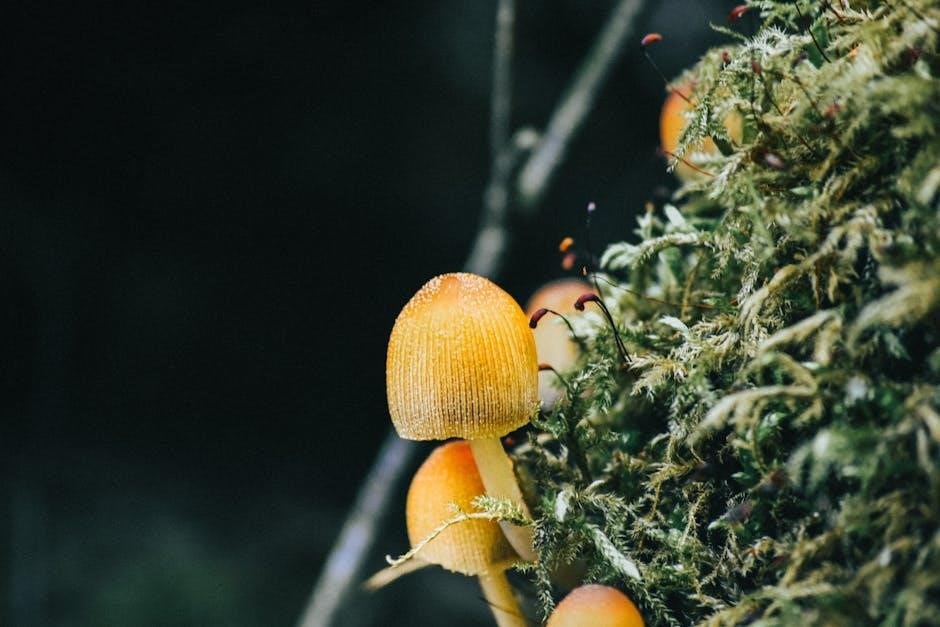
Successful foraging requires understanding the symbiotic relationships between these mushrooms and their host trees, alongside careful observation of the forest floor and microclimates.
Deciduous Forests: Chanterelle and Oyster Mushroom Hotspots
Oregon’s deciduous forests, while less extensive than the coniferous regions, offer exceptional opportunities for foraging, particularly for chanterelles and oyster mushrooms. These woodlands, characterized by trees like maple and alder, provide a different set of ecological conditions favorable to these species.
Golden chanterelles flourish in the fall, often found near hardwood trees, their vibrant color a welcome sight amongst the leaf litter. Oyster mushrooms, known for their ease of identification, are frequently discovered on decaying hardwood logs.
Western Washington and Oregon present a simple formula for locating oyster mushrooms – focusing on hardwood forests increases your chances of success. Careful observation of tree species and decaying wood is key.
These forests offer a rewarding experience for foragers, combining accessibility with the potential for bountiful harvests.
Burn Sites: A Morel Forager’s Paradise
Oregon’s forest fire landscapes, while representing ecological disruption, surprisingly become hotspots for morel mushroom foraging in the years following a burn. Specifically, areas experiencing fires approximately 12 years prior demonstrate consistently high morel yields, creating a unique foraging opportunity.
Morels thrive in the disturbed soil and increased sunlight exposure following a fire, capitalizing on the nutrient-rich environment. Utilizing mapping applications like OnX, filtering for past forest fire locations, is a highly effective strategy for pinpointing potential morel patches.
This technique isn’t limited to the Pacific Northwest; it’s a widely applicable tip for morel hunters across the country. However, always prioritize safety and be aware of potential hazards in burn areas.
Burn sites represent a specialized, yet productive, habitat for the dedicated morel forager.
Coastal Forests: Unique Species and Challenges
Oregon’s coastal forests present a distinct foraging environment, characterized by high humidity, dense vegetation, and unique fungal species adapted to the maritime climate. These forests, dominated by Sitka spruce and other coastal conifers, harbor mushrooms not commonly found inland.
Foraging along the coast, however, introduces specific challenges. Dense undergrowth can hinder visibility, making identification more difficult. The damp conditions also accelerate decomposition, potentially shortening the window for finding choice edibles.
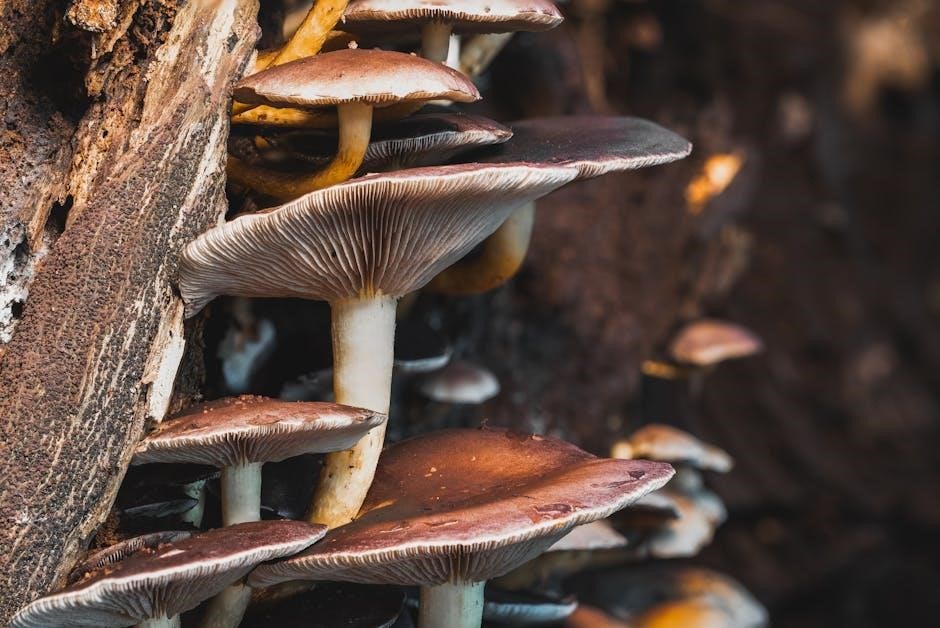
Navigating the terrain can be physically demanding, and coastal weather patterns are notoriously unpredictable. Careful planning and appropriate gear are essential for a safe and successful foraging expedition.
Despite these hurdles, the rewards – discovering rare and flavorful mushrooms – make coastal forests a compelling destination for experienced foragers.