Mastering a manual transmission varies greatly; initial competence takes 2-5 hours, while true proficiency—smoothness and confidence—can require 30-50+ hours of dedicated practice.
The Declining Art of the Stick Shift
Once a ubiquitous skill, driving a manual transmission is becoming increasingly rare as automatic and advanced transmission technologies dominate the automotive landscape. This shift contributes to a dwindling pool of drivers proficient with a clutch and gear stick. While learning times vary – from a few hours for basic operation to weeks for mastery – the art itself is fading. The demand for manual drivers, though niche, persists in specific sectors, like trucking, offering financial incentives. Despite its decline, the engaging and rewarding driving experience continues to attract enthusiasts.
Why Learn Manual in a Modern World?
Despite the prevalence of automatics, learning manual offers unique benefits. It fosters a deeper connection with the vehicle, enhancing driving engagement and control. While initial learning—2-5 hours for basics, potentially 30-50+ for proficiency—requires dedication, it unlocks opportunities. Certain industries, like trucking, actively seek manual drivers, offering sign-on bonuses. Beyond practicality, mastering a manual is a rewarding skill, preserving a diminishing automotive art form and providing a uniquely satisfying driving experience.
Initial Learning Phase: First Few Hours (2-5 Hours)
Expect a steep learning curve; the first 2-5 hours focus on clutch control, finding the friction point, and overcoming inevitable stalls—practice is key!
Understanding the Basics: Clutch, Gear Stick, and Pedals
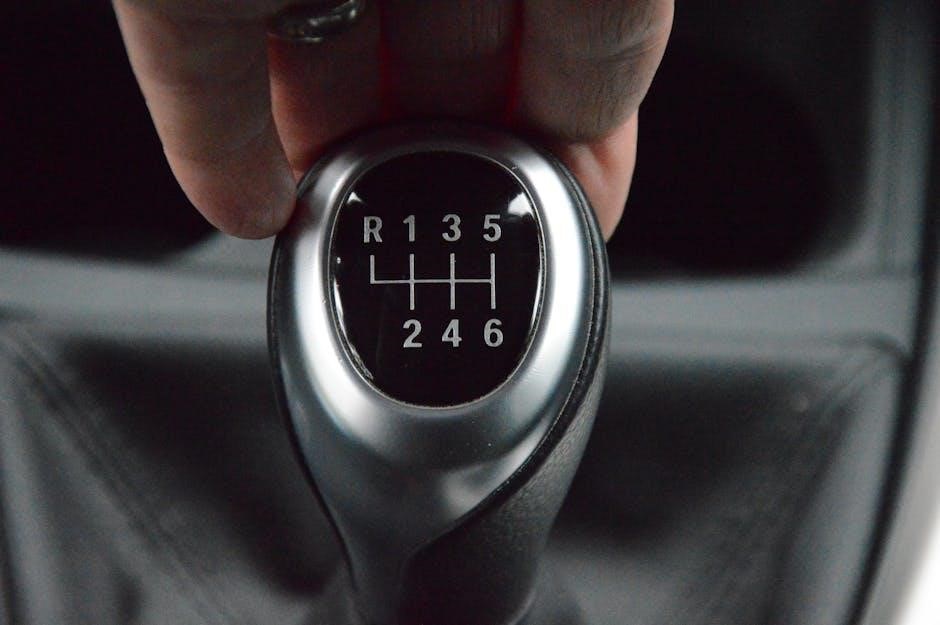
Before starting, familiarize yourself with the three key components: the clutch pedal (leftmost), used to disengage the engine; the gear stick (center console), selecting power transmission ratios; and the accelerator/brake (right). Understanding their interplay is fundamental. The clutch controls engine connection, demanding smooth engagement to avoid stalling. The gear stick requires precise movements to select the correct gear for speed and conditions. Initial hours involve coordinating these, feeling the friction point, and learning how each pedal influences vehicle movement – a process demanding patience and focused practice.
Starting and Stopping: The Biggest Hurdle
Initially, starting and stopping present the steepest learning curve. Coordinating clutch release with gentle acceleration to find the ‘friction point’ – where the engine begins to engage – is crucial. Expect frequent stalls during these first few hours; they’re a natural part of the process. Smooth stops require downshifting and controlled clutch engagement. Mastering this fundamental skill builds confidence and lays the groundwork for more advanced maneuvers. Patience and repetition are key to overcoming this initial challenge.
Finding the Friction Point
Locating the friction point – the sweet spot where the clutch begins to engage the engine – is paramount. It’s felt as a slight vibration and a change in engine note. Slowly release the clutch while gently applying gas; the car will begin to creep forward. Holding it here prevents stalling. This takes practice, often several hours, to develop muscle memory. Recognizing and consistently finding this point is the foundation for smooth starts and controlled low-speed maneuvering, essential for new drivers.
Stalling: Expect It and Learn From It
Stalling is an inevitable part of the learning process, especially during the initial hours. Don’t be discouraged! It signifies you’re exploring the clutch’s engagement. Analyze why it stalled – too little gas, releasing the clutch too quickly, or a combination. Each stall is a lesson. Expect numerous stalls in the first few hours, gradually decreasing as you refine your coordination and sensitivity to the friction point. Embrace it as feedback, not failure.

Developing Coordination: Days 1-3 (5-15 Hours)
Focus on smooth starts and first-gear control during these initial days, progressing to upshifting into second. Consistent practice builds muscle memory and coordination.
Smooth Starts and First Gear Control
Achieving smooth starts is paramount during the first phase of learning. Expect initial stalls – they are a crucial part of understanding the clutch’s engagement point. Focus on coordinating the release of the clutch with gentle accelerator input.
Consistent practice, even in short bursts, will accelerate progress. Aim for a controlled, jerk-free launch, gradually increasing speed in first gear. Mastering this foundational skill builds confidence and sets the stage for more complex maneuvers. Remember, patience is key!
Upshifting: Moving to Second Gear
Once comfortable with first gear, upshifting to second introduces a new layer of coordination; Briefly release the accelerator, depress the clutch, move the gear stick to second, and smoothly re-engage the clutch while applying throttle.
The timing is crucial; avoid abrupt movements that cause jerking. Practice finding the “sweet spot” where the engine speed and gear ratio align for a seamless transition. This skill, like all others, improves with repetition and focused attention.
Downshifting: Preparing for Stops and Turns
Downshifting is vital for maintaining control and engine braking, especially when approaching stops or navigating turns. Lift off the accelerator, depress the clutch, select a lower gear (e.g., from third to second), and smoothly release the clutch while gently applying the gas.
This technique prevents engine lugging and provides better responsiveness. Mastering downshifting takes practice to synchronize engine speed with the chosen gear, ensuring a fluid and controlled maneuver.
Hill Starts: Mastering the Technique
Hill starts present a unique challenge, demanding coordination to prevent rollback. Engage the handbrake, find the friction point with the clutch, and gently apply gas. As you feel the engine pull, release the handbrake simultaneously with a smoother clutch release and increased gas.
This prevents stalling and ensures a controlled ascent. Consistent practice is key to building muscle memory and confidence on inclines.

Intermediate Skills: Days 4-7 (15-30 Hours)
After a week, drivers should confidently navigate all gears, practice rev-matching for smoother transitions, and adapt to real-world traffic conditions effectively.
Smooth Gear Changes Through All Gears
Achieving seamless gear transitions is a cornerstone of manual driving proficiency, typically developing within the first week or two of consistent practice (15-30 hours). This involves coordinating clutch release with throttle input and precise gear stick movement. Initially, changes may feel jerky, but with repetition, muscle memory builds. Focus on minimizing disruption to vehicle momentum. Mastering this skill enhances driving enjoyment and fuel efficiency, transforming a potentially frustrating experience into a fluid and rewarding one. Consistent practice is key to internalizing this crucial technique.
Rev Matching: Improving Smoothness and Efficiency
Rev matching, an intermediate skill, typically emerges after several weeks (30-50+ hours) of driving a manual. It involves briefly increasing engine RPMs during downshifts to synchronize engine speed with the lower gear. This eliminates the jarring sensation of mismatched speeds, creating incredibly smooth transitions. While not essential for basic operation, rev matching significantly enhances driving smoothness, reduces wear on the clutch, and improves overall efficiency. It’s a technique that separates proficient drivers from beginners, demanding precise coordination and timing.
Driving in Traffic: Adapting to Real-World Conditions
Navigating traffic with a manual transmission requires several days to a week (15-30 hours) of consistent practice after mastering basic shifts. The constant stop-and-go demands quick clutch work and gear changes, testing coordination. Adapting to real-world scenarios builds muscle memory and anticipation; Expect initial frustrations as you learn to smoothly transition between gears amidst unpredictable traffic flow. Proficiency comes with experience, transforming a challenging task into a fluid, engaging driving experience.
Emergency Stops: Practicing Safe Procedures
Executing emergency stops in a manual car demands dedicated practice, typically after 15-30 hours of driving. Mastering the coordinated action of simultaneously depressing the clutch and brakes is crucial. Initial attempts may feel awkward, but repetition builds reflex. Safe procedures involve downshifting appropriately while braking firmly. Consistent practice in a controlled environment builds confidence and ensures a swift, secure response during unexpected situations, solidifying learned skills.
Advanced Techniques: Weeks 2-4 (30-50+ Hours)
Refining skills like heel-toe downshifting and clutchless shifting requires substantial practice—often exceeding 30 hours—to achieve smoothness and precision on the road.
Heel-Toe Downshifting (For Performance Driving)
Heel-toe downshifting, a technique for smoother cornering, demands significant coordination and practice. It’s not a skill mastered quickly; expect weeks, even months, of dedicated effort. Initial attempts will feel awkward, requiring precise footwork to blip the throttle while braking and downshifting simultaneously. Consistent practice builds muscle memory, allowing for seamless gear changes that maintain vehicle balance and minimize disruption during spirited driving. While not essential for daily commuting, mastering heel-toe elevates driving skill and provides a rewarding connection with the vehicle.
Clutchless Shifting (Advanced Technique)
Clutchless shifting, an exceptionally advanced maneuver, requires a deep understanding of engine RPM and gear ratios. It’s not a skill to attempt until proficient with standard manual techniques; learning could take months of focused practice. This method involves timing gear changes with engine speed, eliminating the clutch pedal’s use. Mastering it demands precise coordination and a feel for the vehicle, reducing wear and potentially improving speed, but carries a higher risk of mechanical stress if improperly executed.
Driving in Various Conditions: Rain, Snow, and Ice
Adapting manual driving to adverse weather demands significant experience – beyond the initial learning curve. Expect several days, even weeks, of practice in controlled, slippery environments. Rain requires gentler clutch engagement and lower gears. Snow and ice necessitate even more finesse, utilizing engine braking and avoiding sudden movements. Mastering these conditions builds a comprehensive skillset, enhancing control and safety, but requires dedicated effort after achieving basic manual proficiency.

Factors Affecting Learning Time
Learning speed depends on prior driving experience, vehicle type, environment, and individual aptitude; some grasp it in days, others need weeks of consistent practice.
Prior Driving Experience
Individuals already familiar with vehicle operation often adapt more quickly to a manual transmission. Understanding concepts like clutch control and gear selection provides a foundational advantage, shortening the initial learning curve. Those new to driving altogether will naturally require more time to develop the necessary muscle memory and coordination. Previous experience with other vehicles, even automatics, builds a base for understanding road dynamics and vehicle response, ultimately accelerating the process of mastering the stick shift.
Vehicle Type and Clutch Feel
The learning experience is significantly impacted by the vehicle itself. Older cars often have heavier clutches and less forgiving gearboxes, demanding more effort and extending the learning period. Modern vehicles, conversely, frequently feature lighter, more progressive clutches, easing the initial transition. Clutch “feel” – the point at which engagement occurs – varies widely between manufacturers, requiring drivers to recalibrate their technique. A vehicle with a predictable clutch will accelerate learning, while a vague one will prolong it.
Learning Environment (Traffic, Terrain)
The surrounding environment dramatically influences the learning curve. Starting in a quiet, flat area minimizes distractions and simplifies hill starts. Progressing to moderate traffic introduces real-world pressures, demanding quicker reactions and smoother gear changes. Hilly terrain adds complexity, requiring precise clutch control to prevent rolling backward. Consistent practice in diverse conditions accelerates skill development, but overwhelming environments can hinder progress and increase frustration, extending the overall learning timeframe.
Individual Aptitude and Practice Frequency
Natural coordination and mechanical aptitude significantly impact learning speed. Some individuals grasp the clutch-gear relationship intuitively, while others require more repetition. Consistent, focused practice is paramount; short, frequent sessions are more effective than infrequent, lengthy ones. Dedication—driving several times a week—will yield faster results than sporadic attempts. Ultimately, the time to proficiency hinges on a blend of inherent ability and committed effort.

The Value of Manual Transmission Skills in the Job Market
Demand for manual drivers, particularly in trucking, offers sign-on bonuses—up to $2,500—and increased earning potential, rewarding the time invested in learning.
Demand for Manual Drivers in Specific Industries (Trucking, etc.)
While automatic transmissions dominate the passenger vehicle market, a surprising demand persists for drivers skilled in manual transmissions, especially within specialized industries. Trucking companies, in particular, frequently seek drivers proficient with standard gearboxes. This need translates into tangible benefits; a recent LinkedIn advertisement showcased a $2,500 sign-on bonus for qualified drivers possessing manual transmission experience. The learning curve, ranging from initial hours to weeks of practice, becomes a valuable investment when considering these financial incentives and career opportunities. This skill isn’t dying, it’s adapting!
Sign-On Bonuses and Increased Earning Potential
The diminishing pool of drivers skilled in manual transmissions is creating a lucrative opportunity for those willing to learn. Companies are actively incentivizing this skillset with substantial sign-on bonuses, like the $2,500 offered by an Ontario-based carrier. While mastering the clutch and gear changes requires dedicated practice – potentially 30-50+ hours – the financial rewards can quickly offset the time investment. This specialized skill translates to increased earning potential, making the learning process a worthwhile endeavor in today’s job market.

Troubleshooting Common Issues
Expect initial struggles; stalling, grinding gears, and friction point difficulty are normal during the 2-5 hour initial phase, improving with consistent practice.
Stalling Frequently
Frequent stalling is almost universally the first challenge for new manual drivers, particularly within the initial 2-5 hours of learning. Don’t be discouraged! It’s a natural consequence of coordinating the clutch, gas, and gear selection. The key is to analyze why it’s happening – often, it’s insufficient gas or releasing the clutch too quickly.
Consistent practice, focusing on finding that friction point, will dramatically reduce stalling. Remember, even after 15-30 hours, occasional stalls can occur, especially in challenging situations like hills.
Grinding Gears
Gear grinding typically emerges as learners progress beyond initial starts, usually within the first 5-15 hours of practice. It indicates a mismatch between engine speed and the selected gear. Often, it happens when attempting to shift without fully depressing the clutch or trying to force a gear change.
Addressing this requires smoother clutch engagement and a better understanding of appropriate gear selection for different speeds. With dedicated practice, grinding should diminish significantly as coordination improves.
Difficulty Finding the Friction Point
Struggling to locate the friction point—where the clutch begins to engage—is almost universal during the initial 2-5 hours of learning. It’s the key to smooth starts and avoiding stalls. This challenge stems from developing the muscle memory to coordinate clutch pedal release with gentle accelerator input.
Patience and consistent practice are crucial; feeling for subtle vibrations and engine response will eventually reveal the sweet spot.

Resources for Learning
Numerous options exist: driving schools, online tutorials, and experienced friends/family can accelerate the learning process, potentially shortening the 30-50+ hour timeframe.
Driving Schools Offering Manual Transmission Lessons
Professional driving schools specializing in manual transmissions provide structured learning, often accelerating skill acquisition. While individual progress varies, a focused course—typically 5-10 lessons—can establish foundational competence within 10-15 hours. These schools offer patient instructors and controlled environments, minimizing the initial frustration often associated with learning. They emphasize proper technique, reducing bad habits and potentially shortening the overall learning curve compared to self-teaching. Expect to supplement lessons with independent practice to reach true proficiency, aiming for the 30-50+ hour mark for confident driving.
Online Tutorials and Videos
Numerous online resources—YouTube channels, websites, and instructional videos—offer accessible guidance for learning manual transmission. While these are excellent supplements, they rarely provide a complete learning solution. Expect a longer learning curve relying solely on online materials, potentially exceeding 50 hours, as self-diagnosis of errors is challenging. These resources are best utilized alongside practical, in-car practice. They can clarify concepts and demonstrate techniques, but hands-on experience remains crucial for developing muscle memory and coordination.
Friends or Family with Manual Cars
Learning with a patient friend or family member can significantly accelerate the process, potentially reducing learning time to 20-30 hours. However, this relies heavily on their ability to provide clear, constructive feedback without frustration. Be prepared for stalls and awkward moments! A supportive instructor is key; a critical one can hinder progress. Remember, even with guidance, consistent practice is vital to build confidence and master the coordination required for smooth driving.
Maintaining Manual Transmission Skills
Regular practice—even short drives—prevents skill fade; infrequent use can necessitate relearning aspects, potentially adding several hours to regain proficiency.
Regular Practice to Prevent Skill Fade
Once you’ve invested the time – potentially 30 to 50+ hours – to become proficient with a manual transmission, consistent practice is crucial. Skills deteriorate with disuse, meaning infrequent drivers may find themselves struggling with smooth starts or gear changes. Short, regular drives, even just a few times a week, help maintain muscle memory and coordination.
Think of it like riding a bicycle; you don’t entirely forget, but it takes effort to regain finesse. Without practice, relearning elements can add several hours back onto the initial learning curve, diminishing the benefits of your initial investment.
Driving Different Manual Cars
After mastering the basics, experiencing various manual vehicles accelerates skill development. Clutch feel, gear ratios, and shift points differ significantly between cars. Exposure to these variations – from older models to newer ones – enhances adaptability and reinforces fundamental techniques.
This broader experience can shave hours off the time needed to adjust to a new manual car, building a more intuitive understanding of transmission operation beyond a single vehicle’s characteristics.

The Future of Manual Transmission
Despite declining prevalence, manuals endure in enthusiast cars, offering a connected driving experience; skill acquisition remains valuable, though potentially less crucial long-term;
Its Role in Enthusiast Cars
For driving purists, the manual transmission isn’t simply a method of changing gears—it’s a vital link to the driving experience itself. Enthusiast vehicles frequently retain manual options, fostering driver engagement and control. While learning takes time—ranging from initial hours to weeks of practice—the reward is a uniquely satisfying connection with the machine. This skill isn’t fading within this niche, ensuring its continued relevance for those who prioritize driving feel over convenience. The art of the stick shift lives on, preserved by those who value it.
Potential for a Resurgence
Despite the dominance of automatics, a surprising resurgence in manual transmission interest is emerging. Factors like the demand for manual drivers in specific industries—trucking offering sign-on bonuses—and a growing appreciation for driver involvement contribute to this trend. While mastering the clutch and gears requires dedication—spanning from a few hours to months—the skill’s practical and enjoyable aspects are gaining renewed recognition. This isn’t just nostalgia; it’s a practical skill with potential future value.
Ultimately, despite the learning curve—ranging from hours to months—the engaging experience and potential job market advantages make mastering a manual worthwhile.
Benefits Beyond Just Driving a Car
Learning manual transmission cultivates a deeper connection with the vehicle, enhancing driving awareness and control—skills transferable to other areas. While proficiency timelines vary from a few hours to potentially months, the process sharpens coordination and problem-solving abilities. Beyond the practical, it preserves a diminishing automotive art form, offering a uniquely rewarding experience. The skill can also open doors to specific employment opportunities, like trucking, where manual experience is valued and financially rewarded with sign-on bonuses.
A Rewarding and Engaging Driving Experience
Despite the rise of automatics, mastering a manual transmission offers a uniquely satisfying connection to the driving experience. While initial learning—from 2-5 hours for basic operation to 30-50+ for true skill—demands patience, the reward is heightened control and engagement. It’s a skill that transforms driving from a passive activity into an active, involved process, preserving a dwindling art form and offering a sense of accomplishment.